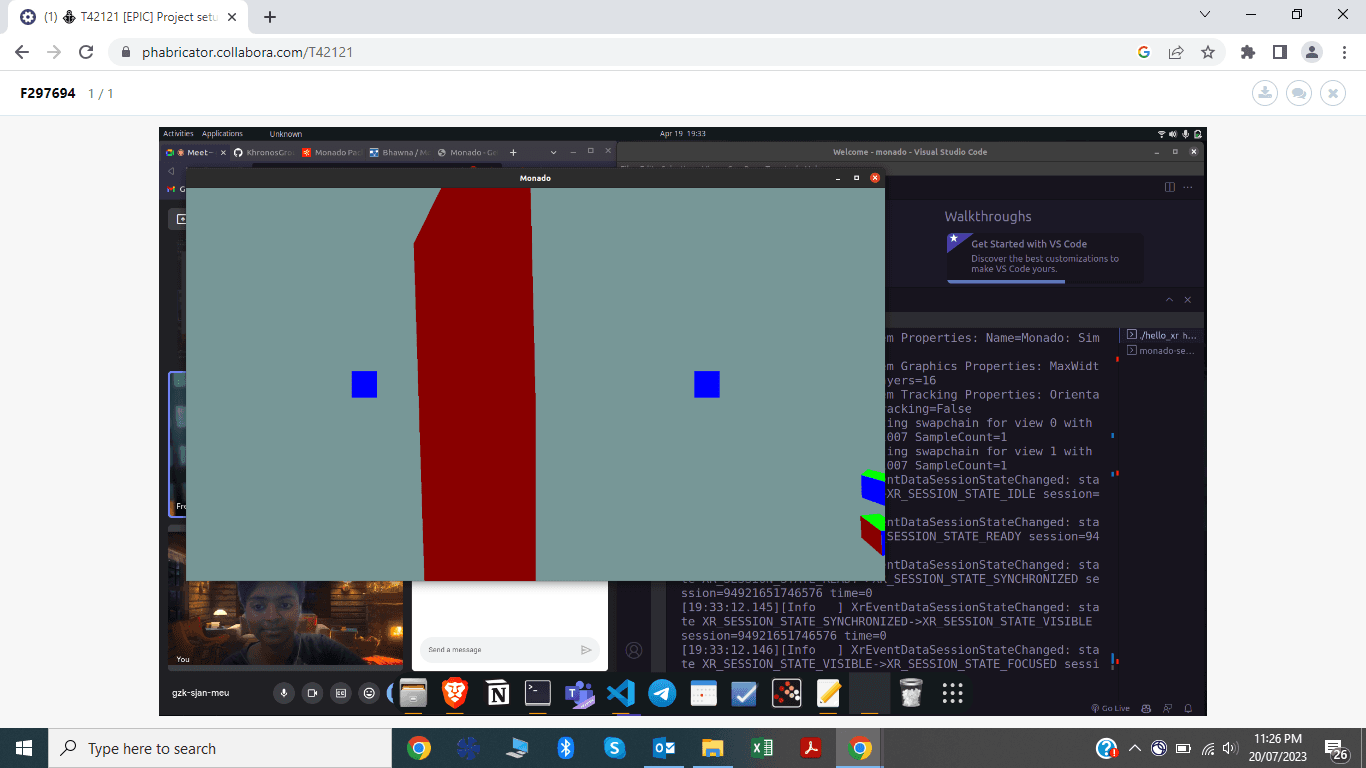
My first remote startup experience did not begin with a polished onboarding dashboard or a task I already knew how to complete. It began with MonadoXR, a large open-source XR project, and a lot of unfamiliar code.
I was excited. I was also nervous. Working remotely with people who had years of experience made me wonder whether my questions would sound too basic.
They often were basic. Asking them anyway became one of the most useful things I learned.
What is MonadoXR?
MonadoXR is an open-source implementation of the OpenXR standard. It is a cross-platform runtime for Linux, Windows, and Android that gives device and platform teams the building blocks required to create XR experiences.
Before joining the project, XR mostly meant headsets and virtual environments to me. MonadoXR showed me the systems underneath: runtimes, devices, graphics, standards, tracking, compositors, and all the engineering required to make separate pieces behave like one experience.
It was the kind of codebase where opening one file could create five new questions. That was intimidating, but also exactly why the experience mattered.
Learning to work without a room
In an office, people can notice when you are stuck. In a remote team, silence looks exactly like progress until a deadline arrives.
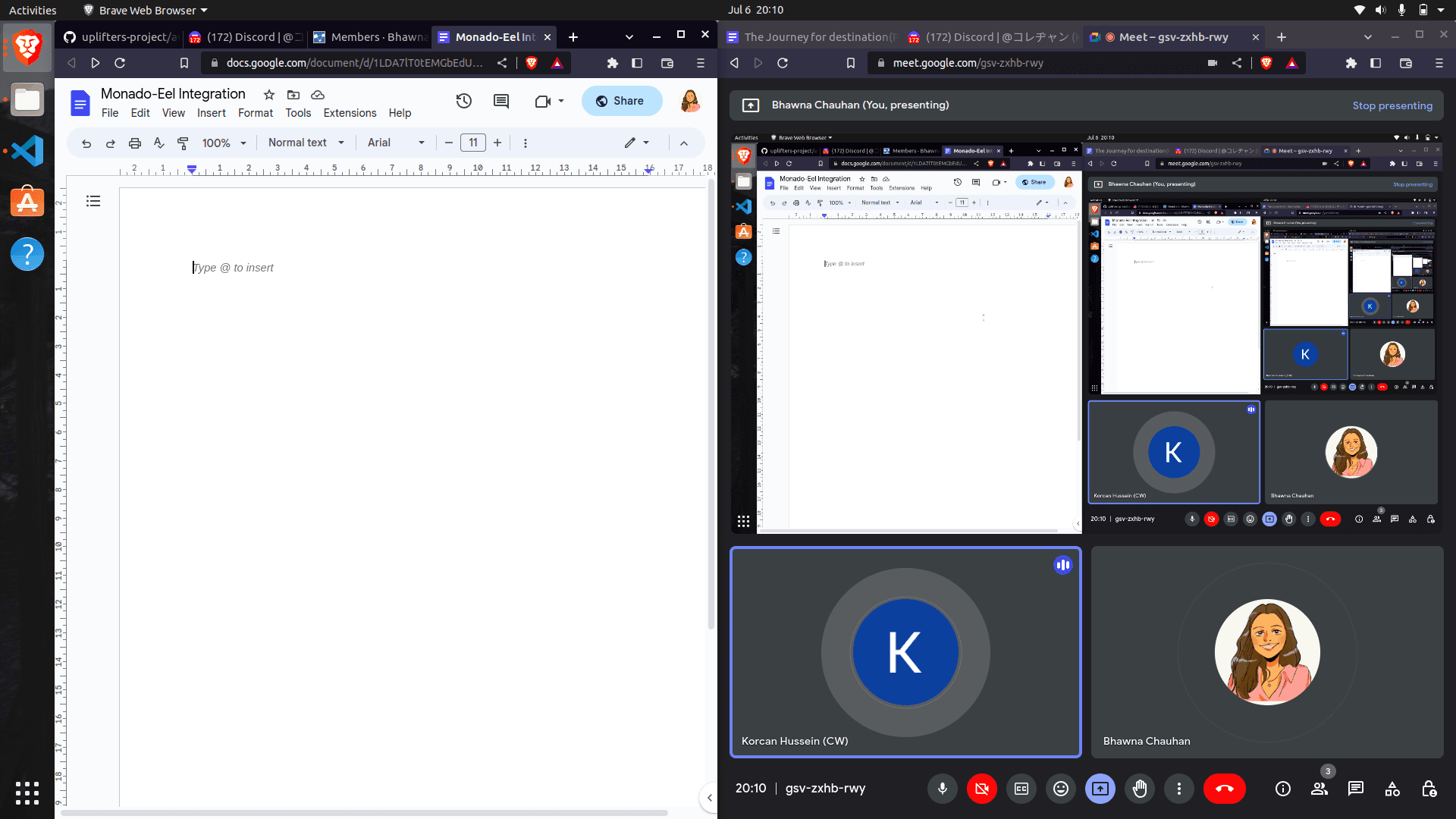
I had to learn to make my work legible. That meant sharing short updates, documenting what I had tried, linking the relevant code, and asking a question that another person could answer without first reconstructing my entire day.
A useful update started looking like this:
- Here is the problem I am trying to solve.
- Here is the part of the codebase I traced.
- Here are the approaches I tried.
- Here is the result or error I am seeing.
- Here is the specific decision where I need guidance.
That structure made it easier for mentors to help me and helped me understand my own thinking.
Reading code became part of the job
During hackathons, I was used to moving quickly and measuring progress through visible features. In a mature open-source project, a full day of reading can be real progress.
I learned to trace a flow instead of trying to understand the entire repository. Start with one behavior. Find where it enters the system, follow the relevant calls, take notes, and test one assumption at a time.
You do not understand a large codebase all at once. You build a map of the small part you need today.
Once I accepted that, the codebase felt less like a wall and more like a city I could gradually learn to navigate.
Ownership is not knowing every answer
I used to think ownership meant solving everything independently. Remote work corrected that idea.
Ownership means noticing risk early, communicating clearly, following through, and asking for help before a blocker becomes expensive. It also means returning after feedback with a better question or a tested change.
My mentors and teammates made this easier. Their support showed me that strong technical teams do not expect people to arrive knowing everything. They expect people to learn responsibly.
What changed for me
This experience made remote work feel real rather than convenient. It gave me confidence in asynchronous collaboration and taught me how much good engineering depends on communication.
It also changed how I enter unfamiliar projects. I now begin by reading the contributor documentation, understanding how the team communicates, reproducing the current behavior, and keeping a small written trail of what I learn.
My first remote startup experience was not smooth every day. That is precisely why it was valuable. It taught me that feeling lost is not a sign that you should leave the room. Sometimes it is simply the first stage of learning the room.